
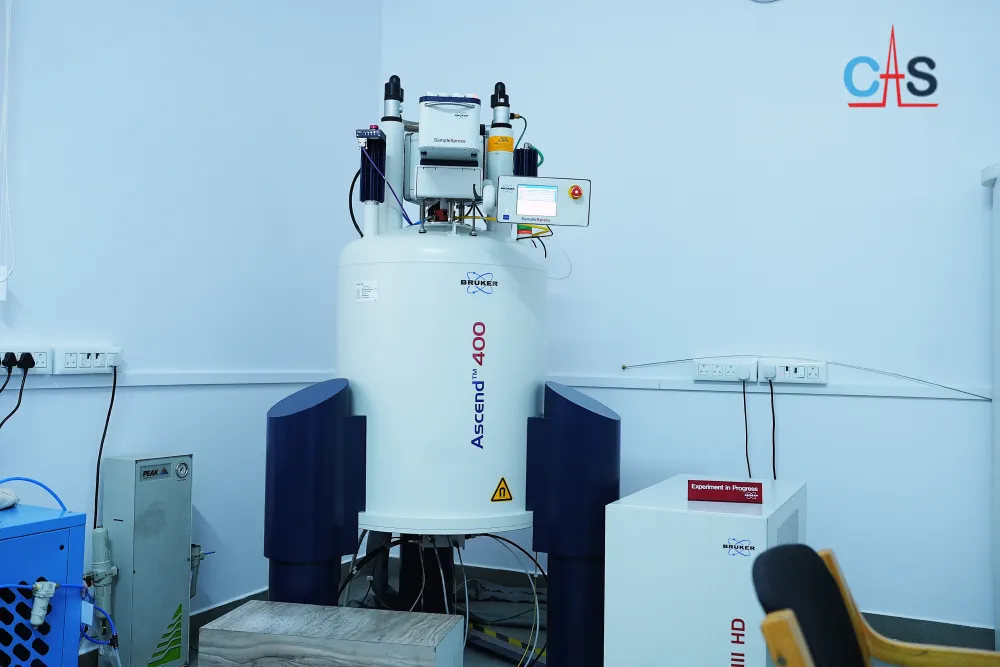
In modern analytical science, understanding the molecular structure of compounds is essential for ensuring product quality, safety, and innovation. One of the most powerful techniques used for this purpose is NMR spectroscopy (Nuclear Magnetic Resonance spectroscopy).
Widely used in pharmaceuticals, chemical research, and material science, NMR spectroscopy provides detailed insights into molecular structure, purity, and dynamics. It plays a critical role in research and development, helping scientists identify compounds and confirm their structure with high accuracy.
In this blog, we will explore the principles of NMR spectroscopy, its working mechanism, key applications, and why it is essential for industries relying on advanced analytical testing services.
What is NMR Spectroscopy?
NMR spectroscopy is an analytical technique used to determine the structure and composition of molecules by studying the interaction of atomic nuclei with a magnetic field.
It is based on the principle that certain nuclei (such as hydrogen or carbon) absorb and re-emit electromagnetic radiation when placed in a strong magnetic field.
This technique is widely used for:
- Structural determination of organic compounds
- Identification of unknown substances
- Purity analysis
- Quantitative analysis
An advanced analytical lab in India uses NMR spectroscopy to deliver precise and reliable structural data for various applications.
Principle of NMR Spectroscopy
NMR works on the principle of nuclear spin and magnetic resonance.
Here’s how it works:
- The sample is placed in a strong magnetic field
- Certain nuclei align with or against the field
- Radiofrequency energy is applied
- Nuclei absorb energy and move to a higher energy state
- When they return to their original state, they emit signals
- These signals are detected and converted into an NMR spectrum
Each compound produces a unique spectrum, which helps scientists identify molecular structure and chemical environment.
Key Advantages of NMR Spectroscopy
1. Detailed Structural Information
NMR provides precise information about molecular structure, including the arrangement of atoms.
2. Non-Destructive Technique
The sample remains intact after analysis, allowing further testing if needed.
3. High Accuracy and Reliability
NMR delivers highly reproducible and accurate results.
4. Quantitative Analysis
It can be used to determine the concentration of compounds in a mixture.
5. Versatility
Applicable to a wide range of compounds, including organic, inorganic, and biological molecules.
Applications of NMR Spectroscopy
NMR spectroscopy is widely used across multiple industries:
Pharmaceutical Industry
- Drug structure confirmation
- Impurity identification
- Quality control and validation
Chemical Industry
- Compound identification
- Reaction monitoring
- Product development
Food Industry
- Detection of adulteration
- Nutritional analysis
- Quality assurance
Research and Development
- Molecular structure analysis
- Biomolecular studies
- Material science research
Types of NMR Techniques
Different types of NMR techniques are used depending on the analysis requirements:
1. Proton NMR (¹H NMR)
Used to analyze hydrogen atoms in molecules.
2. Carbon-13 NMR (¹³C NMR)
Provides information about carbon skeletons.
3. Two-Dimensional NMR (2D NMR)
Offers detailed structural relationships between atoms.
4. Solid-State NMR
Used for analyzing solid materials and complex structures.
NMR vs Other Analytical Techniques
NMR is often used alongside other analytical methods:
- GC-MS → Identifies volatile compounds
- HPLC → Separates components in mixtures
- HRMS → Provides accurate mass measurements
While these techniques are powerful, NMR stands out for its ability to provide detailed structural insights.
Why Choose Professional NMR Testing Services?

Working with a professional analytical testing services provider ensures:
- Access to advanced NMR instruments
- Expert interpretation of results
- Accurate and reliable data
- Compliance with industry standards
This is especially important for industries where precision and compliance are critical.
Conclusion
NMR spectroscopy is a powerful analytical tool that plays a vital role in modern laboratories. Its ability to provide detailed molecular information makes it indispensable for industries such as pharmaceuticals, chemicals, and research.
By investing in reliable analytical testing services in India, businesses can ensure product quality, accelerate innovation, and maintain regulatory compliance.
Call to Action
👉 Looking for accurate and reliable NMR spectroscopy services in India?
Partner with Chromatogen Analytical Solutions for expert analysis and high-quality results you can trust.
1. What is NMR spectroscopy used for?
NMR spectroscopy is used to determine the structure and composition of molecules. It is widely used in pharmaceuticals, chemical research, and quality control processes.
2. How does NMR spectroscopy work?
NMR works by placing a sample in a magnetic field and applying radiofrequency energy. The nuclei emit signals that are analyzed to determine molecular structure.
3. What industries use NMR spectroscopy?
Industries such as pharmaceuticals, chemicals, food, and research laboratories use NMR spectroscopy for analysis and quality control.
4. What are the advantages of NMR spectroscopy?
NMR offers detailed structural information, is non-destructive, highly accurate, and suitable for both qualitative and quantitative analysis.
5. Is NMR better than GC-MS?
NMR is better for structural analysis, while GC-MS is ideal for identifying volatile compounds. Both techniques are complementary.