
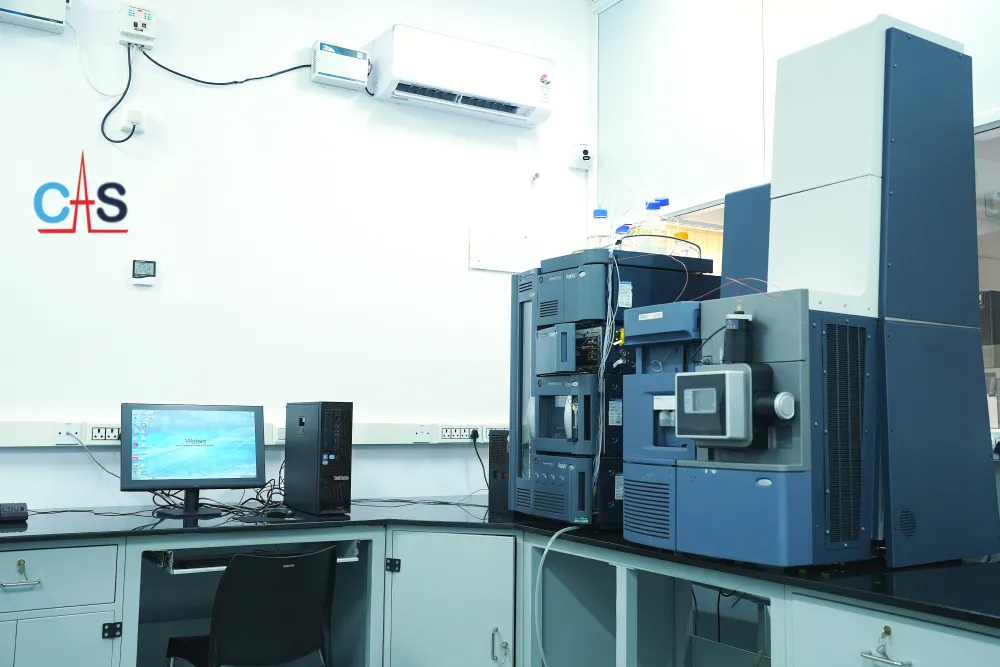
In advanced analytical science, precision and accuracy are critical for identifying complex chemical compounds. One of the most powerful techniques used today is HRMS (High-Resolution Mass Spectrometry).
HRMS analysis enables scientists to determine the exact mass of molecules with extremely high accuracy, making it essential for pharmaceuticals, chemical research, environmental testing, and biotechnology.
With increasing regulatory requirements and demand for high-quality products, industries rely on advanced analytical testing services like HRMS to ensure safety, compliance, and innovation.
In this blog, we will explore how HRMS works, its key advantages, applications, and why it is essential for modern laboratories.
What is HRMS Analysis?
HRMS (High-Resolution Mass Spectrometry) is an analytical technique used to measure the precise mass of molecules and identify their chemical structure.
Unlike conventional mass spectrometry, HRMS provides exact mass measurements, allowing scientists to distinguish between compounds with very similar molecular weights.
It is widely used for:
- Accurate mass determination
- Molecular formula identification
- Impurity profiling
- Structural elucidation
An advanced analytical lab in India uses HRMS to deliver highly accurate and reliable data for complex sample analysis.
Principle of HRMS
HRMS works on the principle of ionization and mass-to-charge ratio (m/z) measurement with high resolution.
Here’s how the process works:
- The sample is introduced into the system
- Molecules are ionized to form charged particles
- Ions are separated based on their mass-to-charge ratio
- High-resolution detectors measure exact mass values
- Data is processed to identify molecular structure and composition
This high level of precision allows HRMS to detect even minute differences between compounds.
Key Advantages of HRMS Analysis
1. High Accuracy
HRMS provides exact mass measurements with exceptional precision.
2. Better Compound Identification
It can distinguish between compounds with nearly identical masses.
3. Trace-Level Detection
HRMS can detect impurities at extremely low concentrations.
4. Comprehensive Analysis
Suitable for complex mixtures and unknown compounds.
5. Regulatory Compliance
Helps industries meet strict regulatory requirements.
Applications of HRMS in Industries
HRMS plays a vital role across multiple industries:
Pharmaceutical Industry
- Drug development and validation
- Impurity and degradation studies
- Metabolite identification
Chemical Industry
- Compound identification
- Quality control
- Reaction analysis
Environmental Testing
- Detection of pollutants
- Water and soil analysis
- Trace contaminant identification
Food and Beverage Industry
- Detection of contaminants and additives
- Food safety testing
- Authenticity verification
Biotechnology and Research
- Protein and biomolecule analysis
- Advanced research applications
HRMS vs Other Analytical Techniques
HRMS is often used alongside other analytical methods:
- NMR Spectroscopy → Structural details
- GC-MS → Volatile compound analysis
- HPLC → Separation of compounds
HRMS stands out for its high-resolution and exact mass accuracy, making it ideal for complex and unknown compounds.
Why Choose Professional HRMS Testing Services?
Working with an experienced analytical testing services provider ensures:
- Access to advanced HRMS instruments
- Accurate and reliable results
- Expert data interpretation
- Compliance with industry standards
This is especially important for industries where precision is critical.
Conclusion
HRMS analysis is a powerful analytical technique that provides unmatched accuracy in identifying and characterizing chemical compounds. Its ability to deliver precise mass measurements makes it indispensable in modern laboratories.
Businesses that invest in professional analytical testing services in India can ensure product quality, regulatory compliance, and innovation.
Call to Action
Looking for reliable HRMS analysis services in India?
Partner with Chromatogen Analytical Solutions for accurate, high-quality, and compliant analytical testing services.
FAQs
1. What is HRMS analysis used for?
HRMS analysis is used to determine the exact mass and structure of chemical compounds. It is widely used in pharmaceuticals, environmental testing, and research applications.
2. How does HRMS differ from normal mass spectrometry?
HRMS provides higher accuracy and resolution, allowing it to distinguish between compounds with very similar molecular weights.
3. What industries use HRMS?
Industries such as pharmaceuticals, chemicals, environmental science, and food testing rely on HRMS for accurate analysis.
4. What are the advantages of HRMS?
HRMS offers high accuracy, trace-level detection, and detailed compound identification, making it ideal for complex analysis.
5. Is HRMS better than NMR?
HRMS is better for exact mass determination, while NMR is used for structural analysis. Both techniques complement each other.