In pharmaceutical manufacturing, specialty chemical formulation, and regulatory quality control, knowing the exact concentration of an active ingredient is non-negotiable. Whether verifying the strength of a finished dosage tablet, determining the purity of an active pharmaceutical ingredient (API), or tracking stability over time, laboratories require quantitative techniques that are both robust and reproducible.
Among chromatographic workflows, High-Performance Liquid Chromatography (HPLC) assay analysis remains the global gold standard for potency determination and quantitative testing.
What is an HPLC Assay?
An HPLC assay is a targeted quantitative procedure designed to measure the exact amount, concentration, or percentage purity of a specific analyte within a sample matrix.
Unlike qualitative screening, which simply answers what is present in a mixture, an assay answers how much of the active component is present relative to a verified, traceable standard.
The process operates on a straightforward analytical workflow:
- Separation: The sample is injected into a high-pressure mobile phase and passed through a stationary phase column (most commonly reversed-phase C18 or C8 columns), where chemical interactions separate the target analyte from excipients, degradation products, and synthesis intermediates.
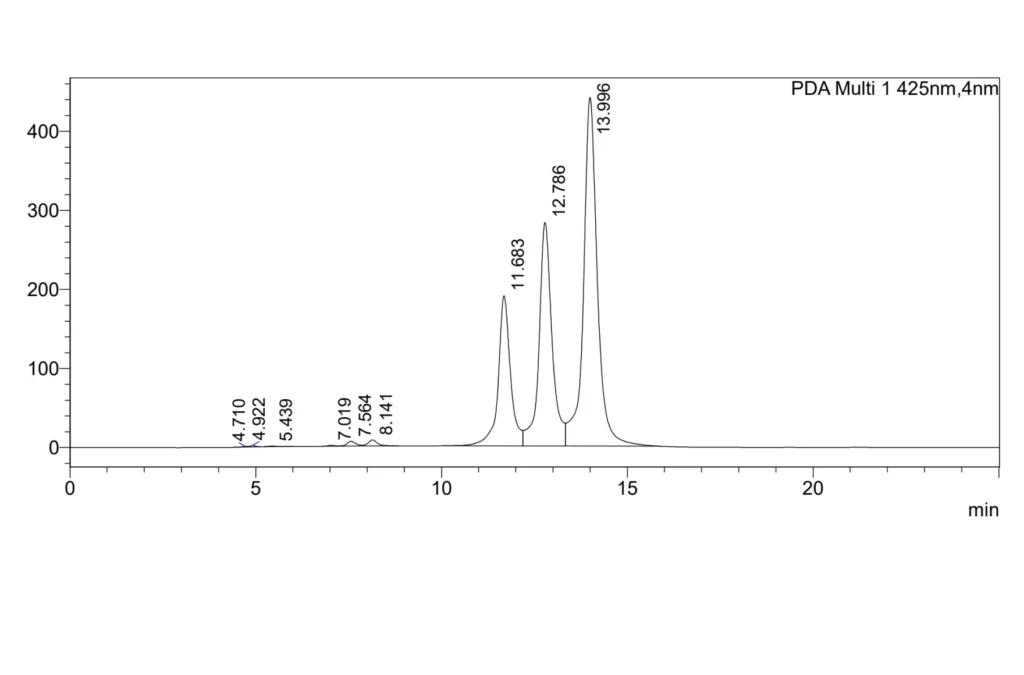
- Detection: As the separated component elutes, a detector (such as a UV/Vis, Photodiode Array [PDA], or Refractive Index [RI] detector) records a response proportional to the analyte concentration.
- Quantitation: By comparing the peak area or peak height of the unknown sample against a multi-point calibration curve or standard solution of known concentration, analysts determine the exact assay percentage.
Critical Method Validation Parameters for HPLC Assays
To ensure regulatory compliance (under ICH Q2(R1) guidelines) and absolute data integrity, every quantitative HPLC assay method must be rigorously validated across key parameters:
- Specificity / Selectivity: Ensuring the method cleanly resolves the active analyte from all known degradation products, matrix excipients, and blank reagents without co-elution.
- Linearity and Range: Demonstrating a direct, proportional relationship between analyte concentration and detector response across the operational concentration window (typically 80% to 120% of the target concentration for finished products).
- Accuracy & Recovery: Confirming the closeness of agreement between the measured value and the true accepted reference value, assessed through spike-recovery studies across multiple concentrations.
- Precision (Repeatability & Intermediate Precision): Verifying low relative standard deviation (%RSD) across repeated injections, different analysts, and separate instruments on different days.
- Robustness: Proving that the method remains reliable despite deliberate minor variations in flow rate, mobile phase pH, column temperature, or organic modifier ratios.
Core Applications of HPLC Assays
HPLC assays serve critical functions across diverse industrial workflows:
- Finished Product Release Testing: Verifying that commercial drug formulations meet strict pharmacopeial assay limits (typically 95.0% to 105.0% of label claim for active ingredients).
- API Purity & Strength Assessment: Confirming the batch-to-batch consistency and raw material potency of bulk pharmaceutical substances before manufacturing.
- Stability Testing: Monitoring active drug content degradation under accelerated and long-term ICH stability storage conditions.
- In-Process Quality Control (IPQC): Tracking reaction completion, blending uniformity, and dissolution rates during industrial formulation processes.
Precision Chromatographic Services with Chromatogen
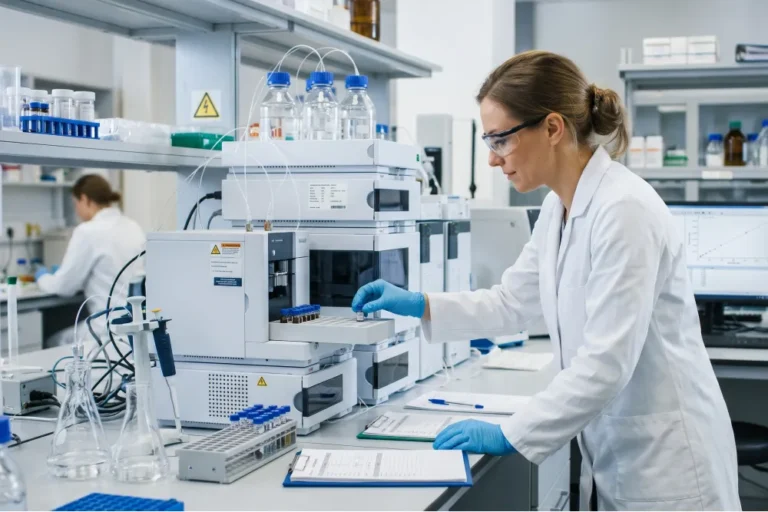
Developing, validating, and executing routine HPLC assays requires modern chromatographic systems, reliable column chemistries, and seasoned analytical chemists who understand regulatory requirements.
At Chromatogen, our advanced analytical testing laboratory offers comprehensive HPLC, LC-MS, and GC-MS testing services tailored to your R&D pipelines, batch release protocols, and regulatory filings.
Ready to ensure uncompromising accuracy in your quantitative testing? Contact Chromatogen today to discuss your HPLC testing and assay validation requirements with our experts.