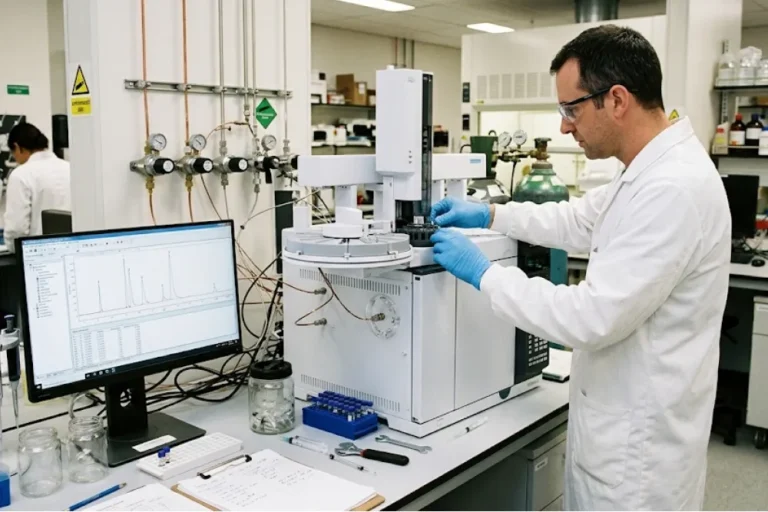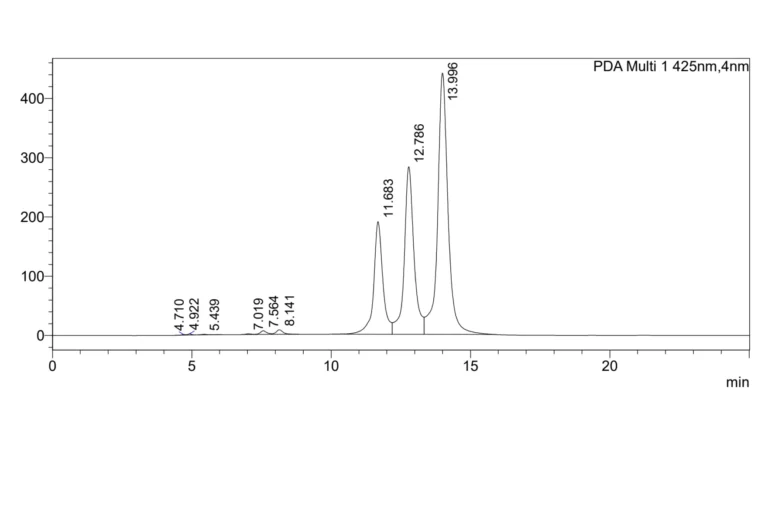
In analytical chemistry, determining the molecular weight and chemical composition of a compound is a daily necessity. Traditionally, this involves coupling a mass spectrometer to a chromatography system, such as in LC-MS or GC-MS. While these “hyphenated” techniques are highly effective, they require valuable time, often taking anywhere from ten minutes to an hour per sample to separate mixtures before they ever reach the mass detector.
When you need rapid answer times, high-throughput screening, or quick molecular weight confirmation of relatively pure samples, there is a faster way. Direct Mass Spectrometry (Direct MS) bypassed the time-consuming chromatography step to introduce the sample directly into the mass spectrometer, delivering critical chemical data in a matter of seconds.
At Chromatogen, we utilize Direct Mass analysis alongside our multi-dimensional spectroscopic suite to provide rapid, high-purity verifications for research pipelines and industrial quality workflows.
What is Direct Mass Spectrometry?
Direct Mass Spectrometry refers to any mass spectrometry method where a sample is introduced, ionized, and analyzed without prior chromatographic separation (like HPLC or GC).
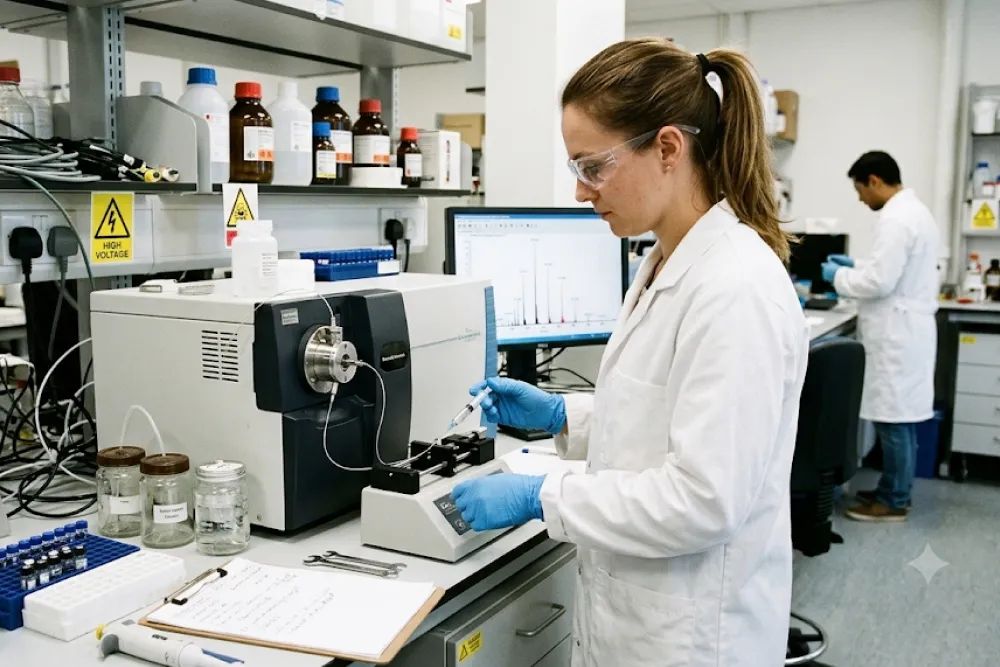
Because it eliminates the mobile phase gradient and column elution process, Direct MS focuses entirely on the immediate ionization and detection of the target molecules. The sample is introduced directly into the ionization source using a syringe pump (direct infusion), a probe, or automated ambient introduction.
Once inside, the analyte is ionized, and its mass-to-charge ratio (m/z) is measured almost instantly.
Key Advantages of Direct Mass Analysis
While chromatographic hyphenation remains necessary for complex, multi-component mixtures, Direct MS offers distinctive benefits for specific laboratory workflows:
- Exceptional Speed: With no column retention times to wait for, a Direct MS run is typically completed in under a minute, drastically speeding up sample throughput.
- Minimal Sample Consumption: Skipping the dilution inherent in chromatographic systems means Direct MS can achieve highly sensitive detection using only a fraction of a microliter of sample.
- Reduced Operational Cost: Without the need for expensive HPLC columns, high-purity mobile phase solvents, and generating bulk chemical waste, Direct MS is highly cost-effective and environmentally friendly.
- Instant Molecular Weight Verification: Perfect for synthetic chemists who need real-time verification of whether a reaction yielded the desired target before moving to the next synthetic step.
How is Direct MS Performed? Common Introduction and Ionization Methods
Direct Mass testing can be achieved through several sophisticated introduction techniques:
- Direct Infusion (DI-MS): The sample solution is continuously loaded into the ionization source (such as Electrospray Ionization [ESI] or Atmospheric Pressure Chemical Ionization [APCI]) via a syringe pump or autosampler.
- Ambient Ionization (e.g., DESI, DART, and Nano-ESI): These state-of-the-art techniques permit direct sampling of solids, liquids, or surfaces with little to no sample preparation, ionizing molecules directly off a surface under open-air conditions.
- Direct Insertion Probe (DIP): For solid or non-volatile samples, a probe is used to place the sample directly inside or right next to the ionization chamber, where thermal heating vaporizes it for immediate measurement.
Core Applications
- Synthetic Chemistry & Quick Reaction Monitoring: Assessing synthetic intermediates, verifying starting materials, and confirming target molecule generation during synthesis.
- High-Throughput Screening (HTS): Rapidly surveying large libraries of compound batches or fractions to identify which samples contain the target molecular weight.
- Confirming Compound Identity & MS Fingerprinting: Providing immediate, non-destructive molecular weight assays for relatively pure synthetic compounds, pharmaceutical actives, and raw materials.
- Forensics & Rapid Testing: Accelerating turnaround times for identifying unknown substances, verifying product counterfeits, and screening trace residues.
Fast, Accurate Analytical Services with Chromatogen
While Direct Mass Spectrometry is incredibly fast, successfully executing it requires high-quality mass spectrometers, strict calibration, and experienced scientists who can accurately assess matrix effects and make correct assignments without the aid of chromatographic separation.
At Chromatogen, we offer high-throughput Direct Mass analysis alongside our comprehensive MS suite, including LC-MS and High-Resolution Mass Spectrometry (HRMS).
Ready to accelerate your testing and verify your molecular targets without the wait? Contact Chromatogen today to discuss your mass spectrometry and analytical testing needs with our experts. Let’s see the corresponding natural, realistic image for your blog below.